Tuesday, December 18, 2007

What we've learned here

Greetings. Yes, it's been a good many months since the CD Slut experiment wound down. I managed to buy a CD every day, as per the plan, and then snagged another 30-something records at that place before I skipped town. I'm still getting through those, as well as the batches I bought on various travels afterwards. But getting through things like the Germs, Edith Piaf and Deep Purple all in rapid succession doesn't seem particularly exciting right now, so I'm taking it nice and slow. I've since implemented a moratorium on new purchases - it's just not fun to try to absorb that much stuff at that pace and keep up your enthusiasm. To an extent, that's the life of a rock critic, but the speed isn't (or shouldn't be) quite so furious.

Anyhow, as I scroll back through the entries (particularly the ones I don't remember - looking at the timestamps should tell you something about my state of mind for doing most of these) I've determined I can't hack it with the snark. Ever since I was an overzealous and embarrassingly earnest Tool fan in high school, my capacity for mockery only goes so far. I never want to get to a sickeningly obsessive, overwrought level, but at the same time, I find that in the way I pass judgment, as well as in what I like to read, I ultimately value most when someone speaks plainly and directly, without the sneer and rolling of eyes that seems to be such a staple of contemporary music criticism. I definitely talk that way sometimes, but there's something about it that translates to sheer annoyance when put into written words, and I've found I can't really go through with it.

Ultimately, what really should come across is excitement. You're excited when it's great, and disappointed when it's underwhelming, only because you really wanted to like it. When I stop listening with the enthusiasm I had when I was fourteen, it will be time to reassess.

A few weeks ago, I was at a bar with one of the bands I had written about on CD Slut. They had taken over the house PA, and were playing random cuts off of their iPods. We stood in a circle with the widest stances we could and air-guitared to old Metallica, Megadeth and Guns N' Roses songs, and it was probably one of the most fun nights I've had in years. It felt like I was back in my room with the posters on the walls of bands I don't listen to so much anymore, making acne-scarred faces that would be of 'naked at school' levels of terror if anyone else saw them.

That's what I'm looking for. I want to like it, I want to say it, and I want to mean it. But in the current music media climate of overanalysis and smirks and ratings down to the percentage point, I don't know where the space for that is anymore. Let's cast aside this nervous self-consciousness and let ourselves be excited again.

Sunday, September 2, 2007

#60: Iggy Pop - Lust for Life

For as much as I've been into the Stooges over the last three years, it's certainly taken me a while to get any Iggy Pop solo records. But I finally snagged a copy of Lust for Life, and my expectations of greatness were mostly met. What really appealed to me about the Stooges was the abrasiveness, especially of Raw Power. I was pretty bummed when I saw the reunited lineup would be skipping the Raw Power on the setlist. I like the first two albums just fine, but when everything was fully in the red at David Bowie's perhaps slightly inept hands, that's what really sets me off.

Lust for Life manages to create an interesting mix of both of those eras, as well as adding dabs of fresh stuff. The first couple of tracks could have been on Fun House, and the screeching guitar on "Some Weird Sin" brings to mind the glorious wailing that opens "Search and Destroy." But when things really get outstanding is on "The Passenger," the 'know you've heard it before but can't place where' nugget of genius that finds Iggy in discarded junkie crooner mode, not as off-the-rails as on "Gimme Danger," but just as eerie. There are very few songs I will listen to on loop, and "The Passenger" just became one of them. It alone made the album worth the purchase.

There are plenty of other doses of goodness, like "Success," which could be a great lost Rolling Stones track, or "Neighborhood Threat," which sounds like a Crazy Horse outtake. I could do without the "Jesus, this is Iggy..." monologue on "Turn Blue," but to grant Iggy his greatness, you also have to allow for his penchant for the theatrical and melodramatic. But when he's roaring like a lion and taking full command of whatever era he's trying to capture, be it the Iggy Stooge of old or a new incarnation of Iggy Pop, it's really as rock and roll as it gets.

Also, this is clearly the greatest album cover of all time. Only fools and mutants disagree.

"The Passenger" live

Friday, August 31, 2007

#59: Dead Kennedys - Frankenchrist

Frankenchrist was the beginning of the end for the Dead Kennedys. They'd still put out another record, 1986's Bedtime for Democracy, but the lawsuit and scrutiny the band faced upon the release of Frankenchrist would ultimately be the early days of the band's undoing. The PMRC would come down hard on the band, and the resulting legal drama would estrange the members and shake the band's confidence. And ultimately, it wasn't for writing songs like "I Kill Children," it was due to the inclusion of an H.R. Giger poster with the album. I'll refrain from posting it here, but I'll just say it's most often referred to as Penis Landscape. So yeah.

Musically, the record is miles away from Fresh Fruit for Rotting Vegetables, the only other DK album I own, and one of the most fun albums in my collection. The songs crack the five minute mark, feature guitar riffs spread out so much that they actually sound like individual notes, but Jello Biafra's sense of humor and barely-contained rage expressed as sarcasm remains intact, and is the main thing that ties Frankenchrist to its earliest predecessor.

The pair of tracks that stands out on first listen are the two that sound the most like the band's early material, "MTV - Get Off the Air" (minus the trumpet solo) and "Stars and Stripes of Corruption," the album's closer, which clocks in at six and a half minutes. Prog wankers. But as far as "MTV - Get Off the Air" goes, I think there need to be more song titles that are commands. There's something pretty great about it, and assertiveness sure is sexy. It's also fun to hear Jello refer to commercial TV as twenty-five years old.

I don't think this one will occupy a near-permanent spot in the car, but the essence of the band will be enough to keep me coming back, as well as finally getting around to buying the rest of these records. I also put this band in my top five bands least likely to reunite.

"MTV - Get Off the Air" live


"Goons of Hazzard" live

Thursday, August 30, 2007

#58: DJ Shadow - Entroducing.....

So, uh...hooray, it's an hour of seemingly incongruous samples that make a cohesive and quite listenable album.

Er yeah, that's honestly it. It's enjoyable, relaxing, well-constructed, and the only sample I recognized was the drone from Metallica's "Orion" on "The Number Song." A salute is in order for not going for "Funky Drummer" or any Parliament beat.

Besides that, it's hard to say much that's incisive or interesting about Entroducing..... It's a work of obsession, and it achieves what it strives for, which is to be an intricate but easily accessible meshing of music from various sources. Basically, if you read any review of it or even have any vague grasp of the style, it will make sense and sound good. That's all there is to it. Excellence in simplicity.

"Organ Donor" live


"The Number Song"

Tuesday, August 28, 2007

#57: Willie Nelson - Red Headed Stranger

I feel kind of guilty, because every year I pick Willie Nelson as number one in my death pool. It's not that I wish him ill or like he's in bad shape, it's just a feeling. Obviously, it's been wrong so far. But I never heard a more satisfied man than a local sports radio host after Bob Hope died, something he'd been predicting for eight years. I hope to one day know that joy.

Apparently, this album tells a story involving religion and murder, but I didn't really pick up on it. Musically, it's remarkably sparse, with rarely more than a single guitar, Willie's voice and sometimes a fiddle slowly grinding away in the background. But I'm pretty appreciative that it's a more simple affair, because to me, the more you add, the worse country gets. I'm aiming for something I can hear around a fire, not something requiring a sixteen-piece orchestra. That's why everyone laughs at "A Man Needs a Maid."

The brevity of these songs is also pretty interesting - the majority clock in under two minutes, and only three tracks break the three-minute mark. So Red Headed Stranger covers a lot of moods pretty quickly, but it never comes across as forced or too quick. It's more like you're gently guided from the murder to the funeral and on through the story. It's also interesting to note that Nelson only had hand in writing just under half of the songs, and the rest come from various other writers, but the whole thing is remarkably cohesive. So first Willie Nelson record, I declare this to be a win. I still need to figure out which Merle Haggard records to get, though.

Monday, August 27, 2007

#56: Minor Threat - Complete Discography

Okay, this is great. Minor Threat needs to reform as a business enterprise just for the purpose of suing Pulp so they can somehow claim the name This is Hardcore for their Complete Discography compilation. Because basically, this is an entire genre defined in forty-seven minutes.

While some of the more storied hardcore records and bands leave me a little cold or hoping for something more aggressive, Minor Threat completely delivers. I'm glad, because I remember being somewhat unimpressed with Fugazi, but it's all here - the blazing tempos, the half-enunciated vocals, and that prominent, rattling bass that I love so damn much. And much to Ian MacKaye's chagrin, this would be a great drinking record.

About a year or so ago, I watched the American Hardcore documentary, and walked away pretty amped about exploring the genre further. Well, all I've really done since then is get a Bad Brains record, but this has totally rekindled my interest. I probably need to go back and watch that movie again so I can make a mental list of where to go from here. I'm assuming I can't go wrong with the Germs and Circle Jerks, so I'll probably start from there. I'm glad there are still genres of aggressive music that I haven't milked dry yet, but I suppose it would have been pretty swell to be into this at fourteen for maximum parental annoyance.

"Straight Edge" - you don't see many frontmen drinking soda onstage anymore


"It Follows" and "Screaming at a Wall"

Sunday, August 26, 2007

#55: The Damned - Damned, Damned, Damned

Often considered the first full-length punk record from the UK, Damned, Damned, Damned was released in 1977, a year after the Ramones' debut. The songs are hyperspeed bursts of alternating snottiness and...nevermind, there's really not much alternating going on. The chorus of the pedal to the floor opener "Neat Neat Neat" is reduced to "Ni Ni Ni," and the barely one-minute "Stab Your Back" manages to sound like a complete song.

Thankfully, no amount of remastering can eliminate the rawness of the record, which, fidelity-wise, actually sounds worse than the first Ramones record. The band obviously has a direction and a personality on their debut, but when comparing them to the Ramones, the vision doesn't sound quite as unified. It's damn good, but in between the Chuck Berry guitar and endlessly active bass, there's a hint of missing character that would have bumped this to another level. Maybe I'm just annoyed that "So Messed Up" is a cautionary tale rather than something more jubilant.

On a happier note, Rat Scabies is probably the greatest stage name anyone has ever come up with. He's the dude licking the pie out of bassist Captain Sensible's hair on the cover. It doesn't show up on the cover, but frontman Dave Vanian's white makeup and slicked-back hair would eventually be ripped off by many a young band, and he looks as badass as M. Shadows from Avenged Sevenfold wishes he did.

"New Rose"


"Fan Club"

Friday, August 24, 2007

#54: ZZ Top - Tres Hombres

I wish I could have been a fly on the wall for the planning of the Tres Hombres cover. "Okay. We have pictures of all three of you, the band name and the album title." "Lower that shit." It's such a weird use of space. I hated it when I first noticed it, but now it's pretty great.

Being a Texan, I feel obligated to love my share of dirty-ass rock and roll, and it's never been a problem to live up to my end of that deal. Discovering beer helped, too. And ZZ Top is a beer drinkin' band. I have my favorite band to listen to on particularly boozy nights, and lately it's been all about ZZ Top and Motorhead - stuff that doesn't require much precision to air-guitar to, but still jacks you upside the head.

Tres Hombres is often thought of as the more 'authentic' counterpart to the band's mega-selling Eliminator. Tres Hombres predates that record by ten years, but save for the synthesizers the band would later throw into the mix (which I'm totally fine with), there's really nothing different musically between the two records. There might be a little more boogie, which is probably more a result of the non-production production job, in which the band sounds as unencumbered as possible, allowing the guitars to achieve a sharper sound and letting the bass be more than just a constant buzz.

Opener "Waitin' for the Bus" takes no prisoners with some of Billy Gibbons' best guitar work, and even though "La Grange" is the most oft-mentioned cut on the album, it's a cover and therefore doesn't count, so "Bus" gets the nod for most badass song, regardless of which tune was responsible for more sales. Once things get going, it's basically thirty minutes of fuzzy grooves and dry throats, and track by track, I could hear Tres Hombres enter my hallowed tome of unsober music.

The only misstep is the ballad, "Hot, Blue and Righteous," which isn't a bad song, but on an album that just tips the thirty-minute mark, is there really a need to bring things down? Maybe I sound like the guys that yelled "too long!" and "prog-rock wankers!" when Napalm Death would play a song that lasted more than a minute, but it just seems unnecessary. But screw it, I'll just revise my playlist to play "Waitin' for the Bus" again instead. Who cares if I don't notice that I heard it already?

"Waitin' for the Bus" and "Jesus Just Left Chicago" live in 2005. Ignore the choreography.

Thursday, August 23, 2007

#53: Beastie Boys - Ill Communication

Often the lowest-reviewed of any of the Beastie Boys' vocal records, Ill Communication is a record made by a band - yeah, things are more band-like this time - that is trying to shed its image as snotty young hip-hop/punk kids. Well, most of the time.

From the start, it's clear that the sample bukkake of Paul's Boutique is long gone, with tracks mostly comprised of original compositions, as well as numerous instrumental tracks ("Sabrosa" is a standout). There aren't any big party anthems - single "Sabotage" is probably the closest thing - and the record sounds a good bit more...not necessarily downbeat, but not as bouncy or upbeat. The most notable exceptions are the dual bursts of hardcore that are two of the most obvious standouts just for their rage alone: "Heart Attack Man" and the minute-long "Tough Guy."

Ill Communication stands as an interesting record in the band's discography, as a point at which the band is basically looking at itself and saying, "Okay, we did all that, what else do we have?" It turned out they had plenty, but it takes some acclimating to. It's the least immediate of any of their vocal albums, but there's a lot going on here. While the layers may not be as fascinating to peel away as Paul's Boutique, it's definitely the right hip-hop record for...whatever it is this mood is.

"Sabrosa" live a few weeks ago


The classic "Sabotage" video

Wednesday, August 22, 2007

#52: Butthole Surfers - Electriclarryland

"Pepper" will always hold a sappy place in my heart. It's not that it was the soundtrack to any particular event, it's just in a personal hall of fame containing songs from the mid-Nineties that I listened to incessantly back when I thought the radio was badass. But for me, "Pepper" is up there with "Hey Man, Nice Shot," "What Do I Have to Do," "Self Esteem" and (especially) "Backwater" as songs that don't necessarily define an era musically, just as specific of what I thought (and still think) was awesome.

Despite holding the album's best-known song in such high esteem, I'd never listened to another Butthole Surfers song (their inclusion on Guitar Hero II notwithstanding) until today, when I bought Electriclarryland, which actually isn't the band's best album title. That trophy has to go to Locust Abortion Technician. But it's still pretty great. And the art...the art.

The record kicks in the door with the full-speed rave up of "Birds," and then takes things down a little with the more melodic-based "Cough Syrup." "Ulcer Breakout" sounds like a lost Zen Arcade track, and "TV Star" features a nice dose of well-played slide guitar. At more than a few points - and especially on "Ah Ha," the band suddenly sounds like a spitting image of REM, and it's hard to say if that would be tremendously insulting to the Butthole Surfers or not.

The more guitar-driven, rock tracks chug ahead with a brand of distortion that reduces the guitars to a buzzing blur, and the more experimental tracks must have been a laborious concoction birthed from various pedals, machines and non-instrument sources. But both types are pretty damn fun.

Electriclarryland feels a bit like a Mr. Bungle record in a way - not when comparing the sound, but both bands pull off something so eclectic yet so unified that it sounds more like listening to something that spans years rather than a single session. It's not the greatest record I've ever heard, but it's definitely one of the most fun that I've bought lately, and has opened the door for me to dig deeper into their discography.

"Ulcer Breakout" on the Larry Sanders Show


"Pepper" on Letterman

Tuesday, August 21, 2007

#51: Bob Dylan - Highway 61 Revisited

Well, it happened. I did something I always dreaded and said I'd probably never do.

I bought a Bob Dylan album.

For as long as I can remember, I never understood why anyone gave a damn about Bob Dylan. I especially hated all the "oh he's such a brilliant poet" praise from the same people that try to put Jim Morrison in some transcendental pantheon of geniuses instead of just as a pretty decent singer for a band that had a few good songs.

But come to find out, Bob Dylan has at least nine good songs. Yeah, it turns out I liked Highway 61 Revisited. I'm obviously not saying anything earth shattering by saying I enjoyed one of the best-received albums...well, ever, but my downright scorn for Dylan has lasted though a few decades now, so this is a big deal for me.

And really, what did it for me was the music itself. His vocals, I can still take or leave, but they're not as annoying, white boy fast talk-rap as some of his other material, and I still don't give a shit about his lyrics whatsoever. But the songs themselves were pretty damn enjoyable, and it really reminded me that I'd probably rather go get a Band album than another Dylan album right away, and that I probably still won't enjoy his early, folksier stuff.

His band sounds pretty great, though, and I'd have to find new levels of curmudgeonly scorn to not get a kick out of the music on these tracks. This is kind of like seeing a teacher you always hated at a bar and finding out that they can be kind of awesome sometimes. I'm not sold on Dylan as a whole yet, and I still hate his smug demeanor and all the clowns that tried to follow him, but Highway 61 Revisited is all right by me.

Monday, August 20, 2007

#49 & #50: Gram Parsons - G.P. and Grievous Angel

G.P. and Grievous Angel would be the only records country rock pioneer Gram Parsons would make during his twenty-six-year-long life. Released in 1973 and '74, respectively, listeners were finally treated to Parsons' take on country without the confines of a band, as the Byrds and Flying Burrito Brothers were in his past at this point.

By this point, Parsons was neck-deep in the quagmire of booze and drugs that would kill him so early, but there's no way to tell from listening to these records. The only evidence of any substance problems is the bloated face on the cover of Grievous Angel, which is only a puka shell necklace away from looking like your average high school jock. But the music is still spot-on.

"Note-perfect" is really the best way to describe these two records. Nothing ever feels misplaced or excessive, and it's recorded so well that it feels spontaneous, although the songs are clearly very well-constructed. G.P. opener "Still Feeling Blue" embodies his whole sound from the start - excellent lead guitar, violin solos, his easygoing vocals, and the always present backup harmonies of Emmylou Harris.

For as much as the genre 'country rock' is thrown around, it's probably much more apt a label for his work with the Flying Burrito Brothers than his solo albums, because this is straight up country in the best sense. Only on a handful of occasions - "Cry One More Time" and "Big Mouth Blues" on G.P. - do things sound like a collision of Hank Williams and Jerry Lee Lewis.

Once Grievous Angel came along, Parsons' problems were worse, and the tracklisting reflects that. Only two of the songs were written by him, but he still sounds absolutely stellar. He comes right out of the gate with one of his own songs, "Return of the Grievous Angel," which maybe features his best-ever harmonies with Harris. In fact, the record was originally to be credited to both Parsons and Harris, but after his death - which preceded the release of Grievous Angel - his jealous widow, who was never a fan of Harris, had her name and image removed from the album's cover. But her presence is even stronger here, adding some flair to Parsons' more earthbound delivery.

This is the second record I've bought this summer to feature a cover of "Love Hurts," a track I always hated, but this time, it's performed the way it should be - as a sensitive, reflective duet, rather than as a boisterous, testosterone-fueled power ballad.

As messed up as he was at this point, it's amazing we got two solo records out of him. But we did, and the universe of non-cheesy, creative, yet mindful of tradition country music is better off as a result. I'd challenge any clown who says "I like everything except rap and country" to not narrow that list down a bit after hearing G.P. and Grievous Angel, and I've also got a few Run-DMC albums they need to hear while I'm at it.

"Big Mouth Blues" live - apparently one of his more coherent performances, as the live setting showed his deterioration far more than his recorded output

Sunday, August 19, 2007

#48: Miles Davis - Sketches of Spain

"Is it jazz or isn't it?" is all I've been able to read online about Sketches of Spain. Rather than working from the modal framework of the album's immediate predecessor, Kind of Blue, Sketches takes pre-existing compositions and adds Miles' virtuosity and Gil Evans' arranging prowess to the mix while altering little else. Since the improvisation is much more contained and there isn't much that stands as a product of its time (1960), it's often said that this is more of an orchestral piece than a jazz record.

I don't care.

All that matters to me is that the songs are damn good, and that the Spanish vibe is carried throughout the record without overdoing it and going into bad Mexican restaurant mariachi band territory. It's expressive but never flamboyant, and restrained without being constricted. Even when he's playing pieces he didn't compose, the coolness remains, and Sketches of Spain smartly drips cool rather than a manufactured stereotypical Spanish flavor, but who would have expected anything less? Coltrane and Cannonball may have sat this one out, and it ultimately sounds more cinematic than club-ready, but it's as enjoyable as a Miles Davis record could be for me.

Saturday, August 18, 2007

#47: Massive Attack v. Mad Professor - No Protection

Okay, it's pretty hard to try to write about an album that's a dub version of an album you haven't heard. While I love the hell out of Blue Lines and especially Mezzanine, I've had a hard time finding Protection in stores, so I figured I'd grab No Protection when I had the chance.

For those unfamiliar with dub, it means that you basically take a song or album and remove most of the vocals while drenching things in echo and reverb. (Fun fact: Firefox spell check doesn't recognize 'reverb' as a word.)

I spent most of the evening driving around town with No Protection as the soundtrack, and it's definitely well put together, and is great for nighttime wandering music. That said, it's so incredibly mellow and chilled out that it's hard to stay too focused on it if you're not familiar with the original mixes or have a taste for the source material. Otherwise, you find yourself drifting in and out of the songs, while...you...zzzzzzz

Friday, August 17, 2007

#46: Television - Marquee Moon

In Delaware in the Sixties, there were two kids named Richard Meyers and Thomas Miller. They decided school had served its purpose, so they hopped in a car, skipped town, and managed to set fire to a field in Alabama and get themselves arrested. In retrospect, it's pretty obvious which one started it.

The two would later meet up again in New York City, this time with the names Richard Hell and Tom Verlaine. Verlaine joined Hell in a band called the Neon Boys, which would later become Television. Hell bailed after a while to form the Heartbreakers, the famed junkie supergroup, and would later ditch that to form the Voidoids. Verlaine stuck with Television, and subsequently released Marquee Moon, universally hailed as one of the more mature records to come out of the late Seventies scene in New York.

Despite the obvious differences in sound between the two's work after their divergence - the Voidoids being a pioneering group that proved there was room for literacy in punk as well as being a smartass, and Television birthing a style of guitar-driven art rock - the first thing that struck me about Marquee Moon is how much it reminded me of the Voidoids' Blank Generation, also released in 1977.

To my ear, Marquee Moon sounds like Blank Generation without the slightly yelpy vocal delivery and more of an ear for melody and instrumental proficiency. Speed up any of these songs and make the lyrics a little more street-level, and you end up with two sibling records.

That said, my pre-existing affinity for the more abrasive warbling of Hell and Co. somehow steers me a little away from Television's more refined sound, especially after the glasses-and-beard types prattling on about the band's greatness. But I did enjoy a good bit of Marquee Moon, even if it wasn't the parts I expected to.

The album's two most storied songs are "Venus," perhaps the most oft-referenced song by people reminiscing about the scene at CBGBs, and the over ten-minute title track, usually considered one of the finest displays of guitar playing from the era. While I didn't find either to be particularly bothersome, any interest they held for me was washed away when the instantly memorable "Elevation" came on, and especially the tremendously bleak (which in my book is often synonymous with tremendously awesome) "Torn Curtain," the latter of which sounds like music that John Cale - their predecessor by more than ten years - wouldn't be writing for another twenty-five after this. I don't think Radiohead would have written "Exit Music (For a Film)" without it.

I'm really happy those two tracks surprised me, because while there's nothing off-putting on the rest of the record, it does have the overall feel of an album I'd probably only put on when I wanted to feel like some superior music dickhead rather than picking out something I'd fully enjoy. But because of those tracks, I'll be giving the rest of the album more of a chance, and hopefully the others will grow on me. I bet they will.

Wednesday, August 15, 2007

#45: Stevie Wonder - Innervisions

Holy shit, everything about this album is perfect. After a listen and a half so far, this is probably the best I've album I've bought so far during my CD Slut endeavor. I've absolutely lost my shit to every track on this record. Right now, Stevie is wailing on "All in Love is Fair," and it's one of the best vocal performances I've ever heard - ever. There's no overrating to be done with this record - it's stellar from start to finish.

I'd actually put this record off for a few days because I felt like it would be a chore or something, but as soon as I gave it a chance, I absolutely cannot stop listening to it. I'm slack-jawed and stunned at this point. As with a few of the previous records I've tacked, I have no idea what to say that hasn't been said before, since this is an absolute classic. There's so much to learn and enjoy on this record that it's almost distracting.

It makes me particularly happy that this is quite the auteur record record - Stevie wrote, produced and arranged this beast, and it shows - it's clearly a singular vision, and at no time does it get complicated or blurred. If someone at a bar asked me to explain this, I'd probably just shrug. Hopefully they'd understand.

"Higher Ground" and "Don't You Worry 'Bout a Thing" live


Stevie Wonder absolutely destroying the drums

Monday, August 13, 2007

#44: Sonic Youth - Daydream Nation

I had a dream the other night. It's the same type of dream I've had before, just with a few details changed. Some people have the dream where they're falling, some people have the 'naked at school' dream, and I have this one.

I'm backstage at a show and handed an instrument. Sometimes it's an instrument I've never played. I am then told - and for some reason agree - to perform said instrument before a live audience in the coming minutes. The first time this happened, I was a fill-in drummer - I cannot drum - for the Dillinger Escape Plan. I awoke in a sweat. This time, I was handed a bass - which I do play - and told I was about to play with Sonic Youth. The only real problem there was that I had never once listened to Sonic Youth. I could name you a few of their albums and only one song, and I had absolutely zero idea how any of their songs went. Somehow, Sonic Youth is a band that had just escaped my ears this whole time.

What I'm most intrigued by in this dream is that I did go onstage and play for a bit. I really wish I could remember what the music sounded like, since I had absolutely no notion of what it was supposed to sound like. And I did manage to suck horribly and was heckled by the audience. I again awoke in a sweat.

So I took that as a sign to pick up some Sonic Youth at the store the next day, and I managed to grab a copy of Daydream Nation. Sonic Youth is a band I always held alongside Pavement in my head, which is bizarre, since I'd never really bothered to listen to either until this summer. People have said to me before, "Wow, I envy you, you get to listen to those bands for the first time. I wish I could do that again." Well, I'll trade you, because now that I've taken the time to listen to Sonic Youth and Pavement, my fears have been confirmed. I can't stand either.

With Pavement, I heard - albeit anachronistically - a less tuneful Weezer, and with Sonic Youth, I hear a more tuneful, yet far less interesting, Husker Du. Again, Daydream Nation is a record rock critics are supposed to fellate (every single review linked to on Wikipedia gets the five-star treatment), and I feel that finding this record to have hardly any virtues places me squarely outside some sort of circle, and I can't decide if that's good or bad or if it matters at all. It probably doesn't, since everyone else will be tripping over themselves to write about all the knock-off bands and reissues. They can have them.

As far as positives, all I can say is that there was a dash of quality interplay between the guitar and the drums here and there, but the songs themselves failed to draw me in even the slightest amount. I kept waiting for songs to start, or for the 'good part' to happen, but nothing developed. I know the final Trilogy trio is supposed to be epic and grand - or perhaps satirical of such devices - but it just sounded meandering and tired to me. At least now I've given it a fair shake, and now I can say - with confidence - I don't get it, I don't get it, I don't get it, this isn't for me. And I'm really quite fine with that.

#43: X - Los Angeles

How did I manage to remain completely oblivious to the fact that X's debut LP was produced by Ray Manzarek? I guess I assumed that he was busy spending the majority of his post-Jim Morrison life trying to convince John Densmore to license Doors songs for commercials. I had no idea he had a hand in the punk scene. How curious.

Perhaps the most interesting thing to me about Los Angeles is how, only four years after the Ramones' debut, how refined and mature X made punk rock sound. There's not much brattiness or snotty vocal delivery here, and the guitars are more Chuck Berry than chainsaw - not to mention Manzarek's keyboards scattered throughout the record.

I've already mentioned my idiotic bias against female vocalists (except for Beth Gibbons and Justine Frischmann), but I have no problems whatsoever with Exene's melody-rich but forceful delivery, and especially when she locks in harmony with John Doe, like on "Your Phone's Off the Hook, But You're Not," things get downright amazing.

The best-known track off the record, as well as from X's whole catalog, is the anti-rape tune "Johnny Hit and Run Pauline," which features more great unison vocals and some pretty harrowing imagery. The prize for weirdest lyrics probably goes to "Sex and Dying in High Society," with lines like "Every time you look at him, you could almost fall asleep/And there's a masterbating [sic] getting underneath the bed." What? I don't know.

There aren't many 'beat you over the head' tempos or full on thrashers on Los Angeles, but it really doesn't matter. It still has its substantial doses of melody and ugliness, and even if it sounds constructed at more of an undergraduate level than junior high, it's bold and punk as hell through and through.

"Your Phone's Off the Hook, But You're Not" live


"Nausea" live, taken from The Decline of Western Civilization

#42: Otis Redding - The Dock of the Bay

I really feel like I'm cheating on the whole premise of this blog by buying things I already know are great, especially records that came out nearly forty years ago and have already had buckets of ink spilled for the cause of extolling their greatness.

So by buying The Dock of the Bay, I expected to be buying what would be come the best soul album in my collection, and that's pretty much what happened. I'm so predictable. I excited that by owning this, I'm finally able to purge from my memory Percy Sledge's nasal, geriatric rendition of the sort-of title track he performed when I saw him a year or so ago.

It's easy to immediately latch onto Redding's vocals and let them carry you through the record, but I'm really getting a kick out of listening to the instrumentation. Otis (or Steve Cropper) really pulled together an A-list, including Booker T, Donald "Duck" Dunn, Isaac Hayes, and a general smattering of the greatest studio musicians of the era.

Cropper's production here is excellent - the sound is completely open while still remaining precise, allowing things like the stellar interplay between the guitar and horns on "Don't Mess With Cupid" to sound as great as they do, all while backing up one of the most incendiary voices of the decade.

Sunday, August 12, 2007

#41: Elvis Costello and the Attractions - This Year's Model

Hip-O Records just re-released all of Elvis Costello's early records, and some chump from the record label sold a bunch of shrink-wrapped copies to the record store I go to. I'm tempted to run out this whole week on CD Slut with Elvis Costello reissues. We'll see what happens.

Since I already own My Aim Is True, his solo debut, I figured I'd get This Year's Model, his second album, and his first with The Attractions, his first - and best-known - backing band.

For a long time, I was hesitant to get any Elvis Costello records. Now, I'm not sure why that was, but I think I was afraid they'd somehow be too cheesy or to...I don't know, English, although I'm sure I never put it in those terms in my brain. Anyhow, I got over my silly little phobia and picked up My Aim is True and Trust over the last few months, and they're obviously great. I know music appreciation is subjective, but there's not a lot of legroom for arguing anything against Elvis Costello's early work. It's simple, effective, and emotionally-driven rock music with dashes of punk and what would later be called new wave - I'm not sure what there is to gripe about.

With This Year's Model, I think I may have picked up my favorite record of his so far. I really liked Trust the best to this point, as his first record was perhaps a bit schmaltzy - the Attractions weren't around to keep things driving forward - but This Year's Model is just as good as Trust, if not more immediate and gripping. There's a smattering of classics, such as the storied "Radio, Radio," and "Pump it Up," which may have been the track that made me originally think I'd hate Elvis Costello, but since I'm over that by now, I can enjoy it just fine.

"(I Don't Want to Go to) Chelsea" is maybe my favorite track on the record, although "The Beat" may have something to say about that. The album is so direct and full of great melodies that it's hard to single any out, but those are probably the two most interesting songs at this point. Somehow I get the feeling that if I had picked this up in high school, I would have clinched the title of 'class weirdo.' I don't know anyone (among my peers) who listened to anything quite like this back then, and even though these records were released when my dad still had his head in contemporary music, he never exposed me to this. The one Police record that was sitting around the house back then was written off as being something his younger sister had left in his collection and he never bothered with it. But then again, that damn guy had a bunch of The Band and Townes Van Zandt records that he never bothered to play for me back in the day. I'm still pissed about that.

While these new reissues don't have the meaty batch of B-sides that the Rhino reissues featured, and there aren't any witty liner notes, at least this batch means that there's more copies in circulation for me to finally get my hands on. I only wish the similarity between the opening bars of "Little Triggers" and the closing credits music for Saturday Night Live weren't a coincidence. That'd totally be like omg foreshadowing.

"(I Don't Want to Go to) Chelsea"


"The Beat" live

Friday, August 10, 2007

#40: David Bowie - Space Oddity

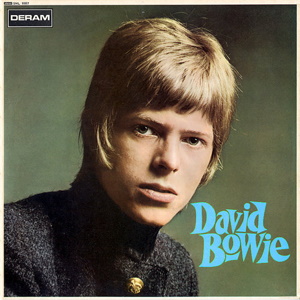
Ignore, if you can, the frightful hairdo David Bowie is sporting on the cover of Space Oddity. At least it's not as terrifying as the cover of his self-titled debut, but it's still shocking in its unpleasantness. While Space Oddity shows up on most Bowie discographies as the album that bridges the gap between Hunky Dory and Ziggy Stardust, it was actually his second record (initially titled Man of Words/Man of Music), and was released just before The Man Who Sold the World.

For an artist who has famously mutated so much during his career, it must have been particularly difficult to pick a starting point from which to spiral out. The sound that would later gain him fame is present in a slightly less polished form here, and his knack for driving songs home with huge melodies and choruses hadn't yet developed fully, but regardless, it's a good record.

The only song from the album that's stuck around is the title track, often erroneously referred to as "Ground Control to Major Tom." That's sort of a shame, since there's a good amount of compelling material here, from the back porch hoedown of "Unwashed and Somewhat Slightly Dazed" to the Spanish-flavored guitar that weaves in and out of "God Knows I'm Good." "Wild Boy from Freecloud" sounds like the show-stopper for some unwritten musical, complete with epic strings and harp, and the off-kilter instrumentation of "Memory of a Free Festival" makes the song sound startlingly modern. I could see some indie band that I don't care about making a whole career around the sound of that track. That said, the inclusion of an aborted take for "(Don't Sit Down)" is useless, and the couplet "Planet Earth is blue/And there's nothing I can do" makes me wince.

So while Space Oddity doesn't have much cohesion in style or many tracks that stand out to the non-historically-minded, it's pretty enjoyable, and surprisingly well put together for being so early in his career. This won't be one I pull off my shelf the most, but I think it's going to have the most for me to discover over time. We'll see if I give it more of a chance.

"Space Oddity" live

Thursday, August 9, 2007

#39: The Police - Ghost in the Machine

Ghost in the Machine is generally agreed to be the Police's weakest record, and that's a pretty accurate assertion. Aside from the one-two opening punch of "Spirits in the Material World" and "Every Little Thing She Does is Magic," there's not much worth giving a damn about on this record, and not much of it is being revisited on the band's most recent tour.

It's been very interesting to watch the reactions towards the reunion tour evolve - at first, everyone was shitting bricks about the band getting back together. The idea of hearing "Message in a Bottle" put together by the original three dudes was a tremendous proposition, no matter what you're interested in. But by the time the tour rolled around to Dallas, there was too much consternation about slowed-down songs, destroyed moods, and, when it got down to it, tremendous boredom. So even though there were twenty-dollar tickets left an hour or two before showtime, I skipped out.

Really, Ghost in the Machine wouldn't have had much to do with my enjoyment of the show, and I suppose that's part of the point of this review - this is likely the least essential Police record, and even though it has two great songs, the rest is a huge dose of filler that doesn't do anything for the band's legacy. When I was a kid, this was the only Police record we had on vinyl, which was an accident anyway, because we determined my dad's sister had left it behind, without the packaging, nonetheless. So I remember just listening to the first two tracks and skipping the rest - even as a twelve year old, I knew what Stewart Copeland and Co. knew in 1981 - that this was some mediocre shit. So without dragging much more into this, I'll just assert that Ghost in the Machine was a pretty stale record that led into the additionally uninteresting Synchronicity, and makes it clear that the early Police records were infinitely superior.

"Every Little Thing She Does is Magic"

Wednesday, August 8, 2007

#38: Air - 10 000 Hz Legend

So my opinion on Air's 10 000 Hz Legend was requested, and as a gentleman, I have obliged. So here's my opinion: I have no idea what the hell to think of this record other than that everything I've read about it so far is pretty much right.

As the band's second proper album (not counting the score to The Virgin Suicides), 10 000 Hz Legend is tough to get a read on. The first few tracks feel a bit like something the band could have sniffed around in the Moon Safari sessions, but then it began to sound like I had inadvertently bought the one existing copy of the secret album Radiohead made in between OK Computer and Kid A. A ton of the atmospheres are the same, that damn computer voice is there, and things are oppressively bleak, although somehow not the kind of oppressive bleakness that I enjoy. Maybe some day I'll try to explain that that previous sentence means.

One thing this album did for me is remind me that I hate Beck. Everything he's done except for Sea Change, I hate. So when his warbling and yelping comes in on "The Vagabond," I was ready to turn it off, make up that the rest of the album was 'decent but lacking,' and go about my business. But I fought through, and there was some good stuff in there, like the directionless but pretty "Radian" and the sublime closer, "Caramel Prisoner."

I wonder if there's a Pinkerton-esque cult around 10 000 Hz Legend, because at first, both provide pretty grating listening experiences. I guess it's hard to call an album of gentle ambient music 'grating,' but a handful of elements here somehow manage to become abrasive without pushing anything into the red. The contrast between the over-tinkering and the potential greatness is perhaps most evident on "How Does It Make You Feel?" a track dominated by vocoder, only to be interrupted by stellar, unprocessed, harmony vocals. I suppose when a genre is called 'electronica' it's an idiot move to crave more humanity on the records, but that's really what makes albums like Talkie Walkie and Moon Safari special - it's always clear that there's men behind the machines, not just something seemingly created synthetically in a vacuum. I guess some could find a robotic, cold appeal to this, but it's not for me.

There really are some gems here, and I don't consider the album to be rubbish, but it's clear the band knew they needed to get back to more comfortable roads, as Talkie Walkie preserves the instrumentation of these first two records, but all additional elements and vocals are put more in focus and handled with a little more care. But as it is, 10 000 Hz Legend is an interesting document of a band trying to put out a few ripples to see if it would take.

"How Does It Make You Feel?"

Tuesday, August 7, 2007

#37: Death - Scream Bloody Gore

One of the first death metal albums ever released (Possessed's Seven Churches probably takes the trophy for the absolute first), Death's Scream Bloody Gore sounds a lot less like a guy figuring out a new genre and more like something already fully-imagined. Chuck Schuldiner, Death's only member from start to finish, a la Nine Inch Nails, kicks things off with a complete grasp if what he wants to create. Writing about Scream Bloody Gore tends to present it as a much more primitive, perhaps boneheaded predecessor to the progressive and experimental touches that would later define the band's more storied output, but from my perspective, this record is just as accomplished as almost everything the band would release up until Sound of Perseverance, an album that's essentially an era unto itself.

"Evil Dead" opens with the same sort of restrained melodic flair the band would later use on songs like "The Philosopher" and "Lack of Comprehension," so it's apparent that Chuck knew what he was doing from the start. The opening track, "Infernal Death," rages just as hard and with as much precision as anything found on Human or Symbolic, and even though Schuldiner handles bass guitar duties here, something he'd never again do on a Death record, it all sounds fully constructed and as ably performed as could be desired.

In fact, the bass is actually pretty great - prevalent in the mix, thick and expressive. The only element that's a bit dated is the drumming, which is more a fault of the production process than the performance. This was before people like Scott Burns and Colin Richardson came around and figured out how to actually record death metal drumming without it blowing out the consoles, so everything is reduced to a distant rumble.

Death would definitely put out better records that Scream Bloody Gore, sadly reaching an early end with Schuldiner's death in 2001, just when it sounded like he was really pushing his boundaries. But pulling back all the way from this record, Death's first LP, and looking all the way down the line to Sound of Perseverance, it's undeniable that Death put together a discography that stands up to and surpasses any of the genre's greats.

"Denial of Life" live

Monday, August 6, 2007

#36: Lou Reed and John Cale - Songs for Drella

As Lou Reed acknowledges at the album's close, it did take him and John Cale a while - about three years - to get around to making Songs for Drella, their tribute to Andy Warhol. But regardless of when it happened, it at least served to get one of the more complicated songwriting duos in the history of music back together for another crack at it, and would foreshadow the Velvet Underground reunion two years later.

I had somewhat expected to hate Songs for Drella, as Reed's output in this era was less that of a songwriter, and more of a writer of narratives who just happened to have music that he would talk over. But here, it works, and I feel like I could pump out a couple thousand words about it. Like on New York, the emphasis falls not on the music, but on the story, which is the life of Andy Warhol. I found myself drawing odd parallels between the arc of Songs for Drella, Zen Arcade and American Idiot: boy leaves small town, hits the city, city is overwhelming, boy grows and changes, takes on new persona, etc.

Besides the opener, "Smalltown," which I was already familiar with, due to its inclusion on Lou Reed's Animal Serenade live album, the first track that stood out was "Open House," which features some seriously grim keyboards, and when Cale's voice kicks in at the end in harmony with Reed's - something never really attempted on a Velvet Underground record, so it sounds particularly surprising here - it was apparent to me that this was more than something tossed off as a quick tribute. There's real feeling and emotion driving these songs, even if Reed still has to be sarcastic about it (sincerity isn't his best virtue).

"Style it Takes" features oddly self-referential lyrics about the Velvet Underground, although they're spoken from the perspective of Warhol, and the minimal, soft music fits directly on the continuum that runs between Paris 1919 and later records like HoboSapiens. One thing that stands out here is that nearly twenty-three years later after they ended their initial creative partnership, Cale's willing to assert himself via his keyboards, and he's not afraid to make things actually sound pretty and more...well, musical, for a change. But then the screeching viola of "Images" disrupts everything, and it serves as an excellent son for "The Black Angel's Death Song."

The somber, delicate "Slip Away (A Warning)" fully encapsulates the album's tone - fragile, perhaps a little timid, possibly in an attempt to describe Warhol himself - and when "I Believe" comes in, which matter-of-factly describes Warhol's shooting at the hands of Valerie Solanas, it's hard to believe that this wasn't a difficult song to put to paper - but then again, an almost bouncy melody is tacked on, so maybe they still weren't comfortable with being completely sincere.

Possibly the album's best track, "Forever Changed" stands out from the rest of the record by presenting more of a driving - but not quite rock - tempo and sense of building towards something, which is perhaps made more impressive how forceful the song is even in the absence of drums - a trademark that runs through the whole record.

Reed gets the last word on "Hello It's Me," the album's closing track, and it's clear he still has yet to reconcile a few of his feelings about his relationship with Warhol. There's still a bit of resentment or uneasiness in the lyrics, and things aren't all nicely wound up; but when he closes the album by simply saying, "Goodbye, Andy," it's probably the most frankly he's ever spoken on a record.

"Forever Changed" live


"Hello It's Me" live

#35: Cannibal Corpse - Vile

Cannibal Corpse needed George "Corpsegrinder" Fisher. After The Bleeding, the band's fourth record, it was obvious that Chris Barnes' voice was absolutely shot. His pained rasps, especially on "Force Fed Broken Glass" and the classic "Stripped, Raped and Strangled" - although this could be considered 'more metal' by some - were so agonized and thin that the record suffered.

On Vile, Fisher brought a dose of freshness to a band that was in danger of getting worn out; he was able to hold down the guttural low end while providing high shrieks, like on the opening of "Devoured by Vermin," the album's first track and still a staple in the band's live set. But it wasn't just the vocals - the band put together an excellent batch of songs, gets a better sense of groove, and still throws out crushers like "Mummified in Barbed Wire" and "Monolith," two of the album's better tracks. "Bloodlands" features an excellent breakdown that builds into yet another ferocious howl, not unlike a great Slayer song.

Cannibal Corpse wouldn't make an album this impressive until Kill, ten years later. But Vile staved off the fatigue that was undoubtedly imminent, as death metal would lose favor in the mid to late Nineties, as well as considering that it's hard to adhere so closely to one genre for so long without repeating things or getting uninspired. But Vile gave the band the momentum it would need for the latter half of the decade until metal would finally regain popularity.

"Devoured by Vermin" live


"Monolith" live - definitely the least frightening Cannibal Corpse song title ever

Saturday, August 4, 2007

#34: Ice Cube - Death Certificate

As I mentioned in my N.W.A. review, I felt like Ice Cube was the group's most accomplished lyricist. While Death Certificate is a year or two after Straight Outta Compton, with AmeriKKKa's Most Wanted in his past, Ice Cube was still hungry in 1991.

When "The Wrong Nigga To Fuck Wit" kicks in, it kicks in SO HARD that it's almost completely absurd. As I said before, Dr. Dre had nothing on Ice Cube vocally until he finally got going on The Chronic, and then, he still had to use Snoop Dogg to cover his ass. Ice Cube produced this along with Sir Jinx and Boogiemen, instead of picking guys who were well known enough to get blasted off the streets. But as it turns out, Ice Cube does N.W.A. no injustice (except for "No Vaseline," which isn't the most 'we're all friends now' song there is), and keeps the vibe and attitude with tracks like "A Bird in the Hand" and "True to the Game." It's an excellent record, with or without the rest of the N.W.A.

"Steady Mobbin'"

Friday, August 3, 2007

#33: B.B. King - Live at the Regal

When I hear about classic live albums, all I ever tend to hear about are The Ramones' It's Alive, James Brown's Live at the Apollo, and B.B. King's Live at the Regal.

I used to be addicted to live recordings. I had Metallica's Live Shit box set, Nine Inch Nails' And All That Could Have Been, and Tool's Salival. While those are still floating around my collection somewhere, I have really gotten out of the habit of enjoying live albums. I used to go out of my way to get the special edition of a record of there were additional live cuts tacked on, and looked forward to new live albums as much as studio ones. But after I got burned out on S&M and Phil Anselmo's uneven delivery on Pantera's Official Live (Hell, I even used to own a Rammstein live album. Think about how useless that is. Both the audio AND video versions.), I got pretty burned out on the whole "crowd noise mixed with songs you already know" thing.

But blues is really one of the genres that needs live records. With the shrieks of the crowd, the improvisation, and the attitude that can only come when there are stage lights beating down and the pressure of cutting it live, blues is a live beast. I'd say it's even more accommodating to the live arena that jazz albums, since jazz improvisation can grow to masturbatory proportions when let loose live, whereas blues really seems to rein things in.

Live at the Regal was cut in 1964, back when King was still standing up and before Clapton came along and co-opted him. The live quality really shines through, and it gives all of the songs an added punch that wouldn't have come in a sterile studio recording. The howling crowd, offering up advice like, "No, don't do it!" after King sings the line, "Baby, I'd much rather be dead." His chatter is pretty great, too - not at Bo Diddley caliber, of course - but it's nice to see that at one point, someone could get away with lines like, "Don't go upside her head, it'll only do one thing - it'll make her smarter, and she won't let you catch her next time."

Song-wise, the most powerful track is "How Blue Can You Get?" which has some of King's most searing vocals ever and an excellent call and response section between the vocals and the horns that builds up to the album's biggest climax, and the crowd goes absolutely apeshit. Really though, it's the horns that caught me a bit off guard here. I pretend to know a fair bit about blues music, but I tend to think of it more in the 'man and his guitar' way rather than 'guy with a full band,' even though there's really nothing that rare about it. A more stripped-down song, like "Worry, Worry," is more what I had in mind, but I'll come around on the brassiness of it all.

So I guess everyone was right. Live at the Regal is pretty damn smokin'. Now if only I could find a good copy of Townes Van Zandt's Live at the Old Quarter, I'd be in business.

"How Blue Can You Get?"


"You Done Lost Your Good Thing Now" live...on The Bill Cosby Show

Thursday, August 2, 2007

#32 - Scorpions - Blackout

So I have this thing. This thing is that if you can't appreciate Whitesnake, the Scorpions, and "Rainbow in the Dark," I'm not sure if we can ever really see eye-to-eye about music. They're not the most poetic of creative endeavors, but good lord, how they do rock.

I tend to avoid greatest hits compilations. I find it a necessarily evil sometimes, especially with bands from the pre-LP days, where the collecting and remastering aspects of the packages make them worth it. Whenever I see greatest hits discs for bands like Black Sabbath, Judas Priest and Iron Maiden, I giggle. I can't imagine having an Iron Maiden collection and missing out on "22 Acacia Avenue" or a Black Sabbath best-of and not being able to hear "Planet Caravan."

However, I think the Scorpions might fall into the category of a band where it makes sense. Some of my fondest memories of listening to the radio as a kid consist of rocking out in the car to "No One Like You" and "Big City Nights" while my dad stared on in horror. I couldn't help it, I dug the stuff. It was ballsy, well-produced, and catchy as hell. But after listening to Blackout, generally considered the band's breakout album, I wonder if they really were able to stretch it out over the span of a record.

Perhaps I'm just so attuned to it from the aforementioned headbanging as a twelve-year-old, but apart from the classic "No One Like You," I really didn't find anything I enjoyed at all on Blackout. It doesn't have to do with Klause Meine's hilarious delivery ("I've missed you since I've been awieeeeee" and "If I had a choice I would stiieeeeee") or the inherent bloatedness of the whole thing, but there just really aren't that many good songs here.

Even the self-titled Whitesnake album had at least five pretty great songs on it, and they spent most of their time aping Led Zeppelin; but they were able to draw it out over multiple tracks, which the Scorpions just couldn't do on Blackout. I have a soft spot for total cheese-dick rock like this, so maybe I'll warm up to it later on, but even after being in the mood to totally rock out, bro-style, Blackout didn't do a whole lot for me.

"No One Like You" live at the storied US festival

One month down, one to go

Well, I'm halfway through this thing. I've spent a decent amount of dollars, but fear not, I'm riding this out through August. It's been a blast - the people at the record store know me by now, as do the bartenders who work between my apartment and the store. For the most part, it's been pretty excellent - there have only been a few stumbling blocks, like ferociously underwhelming records from Pavement, Lauryn Hill and Nile, but there are plenty that I keep going back to - Cat Stevens' Mona Bone Jakon has probably earned the most listens so far, and "Maybe You're Right" off of that record has entered my pantheon of truly amazing songs. Hopefully I'll continue to dig up some good stuff for the next 31 days, and hopefully you'll keep reading.

Cheers.

Wednesday, August 1, 2007

#31: Converge - You Fail Me

Yup, it's Converge. Released in 2004, three years after Jane Doe, the band's greatest work to date, You Fail Me sounds like a band that's gone a few separate ways in the past, and is trying to put them all together.

Whereas the band's earlier records, When Forever Comes Crashing and Petitioning the Empty Sky, were nonstop ragers that didn't slow down for anyone or anything, Jane Doe stretched things out and experimented with longer songs, additional textures, and dashes of melody beneath the chaos. With You Fail Me, it feels like the band is trying to put all that together, and while it works, the amalgam isn't quite as compelling as sticking to one path and riding it out for the duration of a record.

The opening tracks, "First Light" and "Last Light," brought back memories of Jane Doe's two-part song, "Phoenix in Flight"/"Phoenix in Flames," but the excitement when the heaviness comes in on the second track isn't as warranting of furniture destruction as it was when they did it the first time. For the most part, the songs are tighter, with most clocking in between two and three minutes, save for a few exceptions. In the spirit of the eleven-minute title track on Jane Doe, the tracks "You Fail Me" and "In Her Shadow" are presented back-to-back here, and roughly add up to the same amount of time. The pair is the album's high point, especially the reductionist, 'so stupid only a genius could write it' guitar intro to the title track, and the appropriately-damaged acoustic guitar that opens "In Her Shadow."

One reason I like Converge is one of the same reasons I like Sigur Ros. On every album, there's always one absolutely jaw-dropping part, whether due to stunning orchestration or unfathomable brutality (guess which goes with which). That part doesn't seem to come here - perhaps it's still waiting to reveal itself, but so far, there's nothing like the gut-wrenching crescendo in "Jane Doe" or the exposed agony of "Grim Heart/Black Rose" on No Heroes, the successor to this record.

Actually, No Heroes, which would be released two years later, is where the band finally figured out what they were going for with You Fail Me. There's the aforementioned emotional centerpiece of "Grim Heart/Black Rose," but then it's surrounded by thirteen pummeling tracks, most of which barely scratch the two-minute mark. It's a dynamic the band was trying to capture here, but on You Fail Me, it's as if they were trying to patch it together with a glue stick rather than cement.

"Eagles Become Vultures" - why they wanted to add a minute of nothing to the beginning of a two-minute song, I'll never understand


"You Fail Me" live


And for fun, a brawl that broke out on the Jane Doe tour

Tuesday, July 31, 2007

#30: Lauryn Hill - The Miseducation of Lauryn Hill

I don't get it. I just don't. Whatever made this album sell ten million copies or whatever, I don't hear it. It's pleasant enough, I suppose, but it doesn't sound any different than any other 'literate girl that sings words she actually wrote' record to me. Five Grammys? I must be missing something. Maybe it's because I'm turned off by lyrics about marching to Zion or between-song skits featuring awkward people defining what love is, but I didn't find anything to grab my attention.

But due to the aforementioned record sales and awards, there must be something right for a certain audience here, I'm just not it. In regards to nothing, the album has the longest list of personnel ever, that is until Chinese Democracy comes out and there are forty-something credited guitarists, two dozen producers, etc.

The only way I really kept myself amused was by playing 'spot the sample,' and the main one was Gladys Knight and the Pips' "The Way We Were" on "Ex-Factor," but then I'm ashamed because the only reason I know that is because of the Wu-Tang Clan.

I feel bad about my complete apathy towards this record. This was more how I expected to feel about The Score, but I dig that a lot, and Lauryn's hooks are one of the main reasons. I just know when the track that stands out most on the record features goddamn John Legend ("Everything is Everything"), I'm headed in the wrong direction. Whatever makes this work doesn't work for me. This is probably the most indifferent I've felt towards a record in a long time, and that bugs me. If I had to crank out a real review of this now, I'd sweat.

Sorry, Lauryn. It's just stretched-out, pleasant, but not engaging. In a meme, tl;dr

Lauryn Hill - Everything Is Everything